Showing posts sorted by relevance for query primate. Sort by date Show all posts

Saturday, April 26, 2014

Jane Velez-Mitchell Alarmed Over Monkey Import Scheme


Hendry County "The Capital Of Captive Monkeys For Animal Experimentation?"

Jane Velez-Mitchell, cable news host is sounding an alarm over the importation of thousands of monkeys to Hendry County, Florida.

Velez-Mitchell reports, "Animal Defenders International claim there’s a business in Mauritius, a small island off the coast of Africa, that’s working on plans to supply wild monkeys to a proposed breeding facility in Hendry County, Florida.

"While this proposed facility has yet to be confirmed, critics are worried about potential health risks a facility like that could pose for people living in the United States if it were to become a reality."

In recent months discussion has arisen among Hendry county officials and departments about zoning a parcel of land in western Hendry, near the Lee county border to house a large number of research monkeys.

Southwest Florida has numerous "captive wildlife" facilities, including Primate Products, Inc. near the Hendry/Collier county line,north of Immokalee. Primate Products sells "non-human restraint systems" for experiments on animals and reportedly has an unknown amount primates housed at it's facility in south Hendry county. The company sells the monkeys to experimental labs and universities around the country.

From Primate Products catalog, "The Primate Products' restrainer was designed for animal comfort and easily adjusts to accommodate nonhuman primates of different sizes. The standard restrainer is essentially an aluminum frame that provides minimum restraint and maintains easy animal accessibility for investigators.

"The open-air design keeps the primate cool and comfortable while being in the restrainer for long periods of time. Roller bars on the perch assembly are intended to move with the animal when it makes normal movements, thus helping prevent sores on the animals’ hind limbs.

"Optional accessories are often added or removed, as needed, to prevent the primate from feeling excessively confined while perching in the restrainer, or to customize the chair to the primates particular needs."

It's associated company, Panther Tracts LLC owns 640 acres, in turn owned by Pacific Venture Investments, Inc., has one square mile of land valued at about $2.5 million for raising primates in south Hendry county. The property includes a half million dollar building for offices and the monkey population. 

Click for a Google Map of the 28 Primate Products buildings housing thousands of monkeys in South Hendry County, Fl.

Click for a map of Collier, Lee and Hendry captive wildlife facility locations.

(Video: courtesy HLNtv.com)

Monday, March 23, 2015

Monkey Breeding Protests Increasing

LABELLE, FL. -- An animal rights group is claiming a second macaque monkey breeding facility has been secretly given permission to raise non-human primates for eventual sale to biological experimenters in Hendry county.

Another facility in western Hendry is under fire by citizens suing Hendry County government for approving the facility under agricultural rules without public hearings. They claim that there is no designation in the Hendry county zoning code for non-human primate breeding and the county has slipped the business under the guise of an agricultural zoning.

TheirTurn.net this week published a story indicating "The newly-discovered facility has already been built and is owned by the Mauritius-based company Bioculture. Bioculture is leasing land from Primate Products, a company that breeds monkeys and manufactures equipment for use in monkey labs.

Biolculture reportedly lost a court case in Puerto Rico after attempts to operate a monkey breeding facility there. "In 2012, the Supreme Court of Puerto Rico ruled that Bioculture’s already-constucted monkey breeding facility in Puerto Rico could not be opened because it was illegally built on land that was zoned for other purposes," said the TheirTurn story.

Hendry county responded in a press release today saying "Recent press articles and media coverage regarding Hendry County and a second primate facility in the works near Immokalee are inaccurate.

"The facilities in question, Primate Products, Inc. and BioCulture, are located on lands owned by Panther Tracts, LLC. The Panther Tracts, LLC property has been used for primate breeding purposes dating back more than ten years. Additional buildings were approved to be added on the land already in use for related activities.

"Hendry County is formally requesting a retraction or correction of all stories regarding the above mentioned due to erroneous information."

In an additional statement Tuesday the county said,

"Panther Tracts, LLC has been in operation through the proper required permits since 2001 and is up to date with all required building permits with Hendry County.

"The leasing or operations on a property are the responsibility of the property owner as long as operations comply with the approved federal, state and local permits required to conduct business.

"During the 2012 approval of the site development plan, the review met the approval of the Fire Marshall, County Engineer and the Hendry County Health Department.

"Subsequent building permits were issued by Hendry County in compliance with the approved site development plan as recently as 2014.

"This project falls within the permitted uses in the Agriculture future land use category and the General Agriculture zoning district, therefore, no public hearing was required.

"Hendry County stands by the rights provided to our property owners contained within the language of our comprehensive plan and land development code."

A group opposing experimental animal breeding is holding a news conference regarding the Primate Product facility Tuesday at 9 a.m. at the Hendry County House Commission Meeting Room

Wednesday, January 13, 2016

Monkey Argument Going To Trial

LABELLE, FL– The Animal Legal Defense Fund  today said that it's lawsuit challenging Hendry County, Florida’s approval of development permits for two new primate breeding facilities, is headed to trial, after Judge James D. Sloan denied both parties’ motions for summary judgment.

“The Animal Legal Defense Fund looks forward to laying out the facts documenting the county’s illegal conduct at trial,” said ALDF Executive Director Stephen Wells. “The county clearly violated the Sunshine Law by quietly approving these wild primate facilities in back-door meetings without notice or a public meeting, despite their far-reaching and serious impacts.”

The lawsuit, on behalf of local landowners in Hendry and Lee county, alleges that the county’s permitting of the SoFlo Ag and Panther Tracts primate breeding facilities in closed-door conferences, without public notice or meetings, violated the state’s open government law, the Sunshine Law.

The SoFlo Ag and Panther Tracts primate breeding facilities would raise thousands of exotic macaques for sale to the biomedical research industry. The location of the SoFlo Ag facility, on the border of Hendry and Lee county within a few hundred yards of family residences just south of State Road 80, threatens property values and residents’ peaceful enjoyment of their homes, claims the plaintiffs in the case.

The proposed primate facilities is also alleged to pose a public health danger because of deadly infectious diseases the monkeys can carry; the risk of monkeys escaping; and threats to the surrounding ecosystems and water quality. Some investigations have revealed horrendous conditions for monkeys at other Hendry County primate breeding facilities, including cruelty and neglect, said ALDF.
The Animal Legal Defense Fund (ALDF) was founded in 1979 to protect the lives and advance the interests of animals through the legal system. To accomplish this mission, ALDF files high-impact lawsuits to protect animals from harm; provides free legal assistance and training to prosecutors to assure that animal abusers are punished for their crimes; supports tough animal protection legislation and fights harmful legislation; and provides resources and opportunities to law students and professionals to advance the emerging field of animal law.

Wednesday, May 20, 2026

Diseased Monkeys At Laboratories Causing Concerns

Drug-Resistant Diarrheal Disease Circulating Throughout Monkey Experimentation Industry, Infecting Humans

Washington — PETA today released a new report showing that Shigella, a highly contagious, often drug-resistant pathogen spread through fecal contamination, for which humans and other primates are the only natural hosts, is widespread and often un- or underreported among monkeys in the U.S. experimentation industry. 

 There are more than 100,000 monkeys currently in U.S. laboratories, breeding, and holding facilities including thousands housed in facilities in Southwest Florida in Hendry and Collier counties.

Reps. Greg Steube (R-Fla.-17) and Dina Titus (D-Nev.-01) have introduced a bipartisan bill, the Preventing Risky Importation of Monkeys to Avoid Toxic Exposures (PRIMATE) Act (HR 8471), that would ban the importation of monkeys for use in U.S. laboratories. This would end the introduction and spread of pathogens that accompany monkeys brought to the U.S. In 2025, more than 22,000 primates originating from facilities in Asia and Africa were sent to the U.S.

The findings raise serious public health concerns as infected monkeys are transported among importers, quarantine facilities, breeders, contract laboratories, and universities across the country.

In a letter sent today, PETA urges the Centers for Disease Control and Prevention (CDC) to publicly release pathogen surveillance data tied to primate experimentation, including Shigella prevalence, antimicrobial resistance profiles, and documented worker exposures. The letter argues that the CDC cannot warn the public about rising drug-resistant Shigella infections while withholding information about a known reservoir moving through a federally authorized monkey importation and experimentation pipeline.

PETA’s report comes on the heels of a recent CDC warning about rising cases of extensively drug-resistant Shigella infections in humans. Yet the agency failed to acknowledge that primates, long recognized as a natural reservoir for Shigella, are a documented source of infection, even though the CDC acknowledges that imported monkeys can carry pathogens “that may be a public health concern such as clinical signs consistent with filovirus infection, confirmed Shigella and Campylobacter infection, and malaria.”

Shigella is an entrenched pathogen claimed to be circulating throughout the U.S. monkey research industry, infecting workers, persisting in colonies, and contributing to the emergence and spread of multidrug-resistant strains. As one attendee at a University of Washington Safety Committee meeting observed, “Virtually everyone who works in the [primate] units gets ill at some point in their first 6 months, due to meeting staph and Shigella for the first time and being around aerosolized fecal matter.” The University of Washington is home to one of the seven federally funded National Primate Research Centers.

Monkeys have been transported with contagious gastrointestinal disease despite that no illness was documented on their records, PETA found. Just days after 68 monkeys were trucked from the University of Washington's breeding facility in Arizona to Seattle in September 2023, 47 tested positive for Shigella. Yet, they were certified for transport with zero signs of infectious disease.


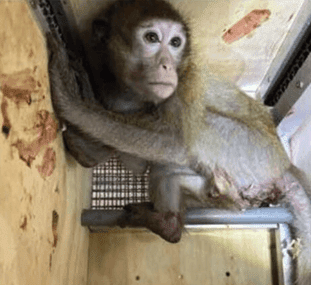
A macaque suffering from diarrhea caged at a primate importation and breeding facility in Florida. Photo obtained by PETA.


Monday, August 08, 2016

Monkey Farm Decision Appealed By ALDF

LABELLE, FL.–The Animal Legal Defense Fund, the nation’s preeminent legal advocacy organization for animals, today filed a Notice of Appeal indicating its intent to appeal the Twentieth Judicial Circuit of Florida’s July 8, 2016 ruling in the “MonkeyGate” case.

The lawsuit, filed by the Animal Legal Defense Fund on behalf of local landowners, alleged that Hendry County recently permitted the SoFlo Ag and Panther Tracts primate breeding facilities—for the purpose of breeding laboratory test subjects—without public notice or meetings, and thereby violated the state’s Sunshine Law which requires transparency in government decision-making. 

Circuit Court Judge James Sloan ultimately found that the county’s approval of the primate breeding facilities was not illegal because the county had historically approved similar facilities in the early 2000s.

Video interview with ALDF attorney following the circuit court trial:

The Animal Legal Defense Fund is appealing the July ruling, alleging that Hendry County staff engaged in legislative policy-making subject to the requirements of the Sunshine Law when they decided to approve primate breeding facilities as “animal husbandry” for agricultural zoning purposes. 

“Animal husbandry” is plainly defined as raising only domestic animals, and does not include primates or other exotic animals. Because the historic approval of similar facilities in the early 2000s also occurred in violation of the Sunshine Law, that historic precedent cannot justify Hendry County’s more recent approvals of the SoFlo Ag and Panther Tracts facilities, say ALDF attorneys. 

The appeal will be heard by the Florida Second District Court of Appeal.

“The Sunshine Law exists precisely because decisions as important as whether to open primate breeding facilities should not take place behind closed doors,” says Animal Legal Defense Fund Executive Director Stephen Wells. “The citizens of Hendry County have a right to know what their government is doing and a government that follows the law.”

About ALDF

The Animal Legal Defense Fund was founded in 1979 to protect the lives and advance the interests of animals through the legal system. To accomplish this mission, the Animal Legal Defense Fund files high-impact lawsuits to protect animals from harm; provides free legal assistance and training to prosecutors to assure that animal abusers are punished for their crimes; supports tough animal protection legislation and fights harmful legislation; and provides resources and opportunities to law students and professionals to advance the emerging field of animal law.

Friday, April 24, 2026

Support May Be Growing For Monkey Import Legislation

Washington — PETA today announces support for groundbreaking legislation introduced by U.S. Reps. Greg Steube (R-Fla.-17) and Dina Titus (D-Nev.-01) that would stop all monkey imports destined for U.S. laboratories or their suppliers, ending the suffering and death of more than 20,000 monkeys shipped into the U.S. every year from Asia, Africa, and the Caribbean.

Hendry and Collier county in Florida are home to hundreds of imported monkeys raised for breeding and eventual animal experimentation. In February, a live monkey, just flown into the U.S. from Africa, was tossed in a biohazard dumpster in Southwest Florida and remained undiscovered for five days, posing a serious biosecurity risk. PETA reported it to state officials. The president of the monkey importation company, BC US, has been criminally charged.

The Preventing Risky Importation of Monkeys to Avoid Toxic Exposures (PRIMATE) Act (H.R. 8471) would protect monkeys, public health, and the integrity of U.S. science by reducing biosecurity risks and eliminating reliance on animals who generate unreliable, non-reproducible data.

Over the last five years, using Centers for Disease Control and Prevention (CDC) records and internal laboratory reports, PETA has uncovered a sharp rise in monkeys imported into the U.S. carrying tuberculosis, shigella, malaria, Herpes B, and other dangerous pathogens. Human exposure to infectious diseases that are circulating in primate laboratories, as happened in a Michigan laboratory in 2023 and in the federally funded National Primate Research Centers, can lead to serious illness and create a real risk of spreading disease to family members and others outside the laboratory.

PETA scientists have shown that CDC requirements are dangerously outdated and ineffective. Monkeys continually enter and exit CDC-mandated quarantine infected with pathogens that can infect other monkeys in transit or in the destination laboratories. The CDC requires testing for only tuberculosis, and that test is done by method known to be inexact. When infections have been found post-quarantine, laboratories aren’t even required to inform the CDC.


Workers at a Cambodian monkey farm prepare to stuff an endangered long-tailed macaque into a crate to ship her for use in experiments. Image obtained by PETA.

“Every year, tens of thousands of monkeys are funneled into the United States through a global supply chain that is inherently unstable, opaque, and a public health risk,” says PETA Chief Science Advisor for Primate Experimentation Dr. Lisa Jones-Engel. “PETA applauds Reps. Steube and Titus for recognizing that state-of-the-art research doesn’t need this pipeline, and that it’s time to shut it down.”

The profit-driven monkey importation industry also threatens endangered species, destabilizes ecosystems, and rips culturally significant animals from the communities that have lived alongside them for generations. Those animals are then subjected to cruel and often deadly experiments. Decades of studies on monkeys have produced inconsistent, non-reproducible results that rarely translate into effective human vaccines and treatments.

Imported monkeys are bred on squalid farms or abducted from their forest homes, pushing long-tailed macaques toward extinction. Many die during capture or transport, and those who survive are ultimately killed in U.S. laboratories.

Note: PETA supports animal liberation, opposes all forms of animal exploitation, and educates the public on those issues. PETA does not directly or indirectly participate or intervene in any political campaign on behalf of or in opposition to any candidate for public office or any political party.

Tuesday, February 18, 2025

LaBelle May Be Home To 20,000 Monkeys In Secret Deal

PETA Uncovers Deal to Cage 20,000 Monkeys In Florida

LaBelle, Fla. —PETA has uncovered a secret deal between monkey importer Charles River Laboratories and SIMI United States, LLC, a company newly incorporated by the executives behind Safer Human Medicine—the company intent on building a gigantic monkey farm and warehouse against the wishes of locals in Bainbridge, Georgia —to turn 70 acres of ecologically sensitive land in LaBelle into yet another massive monkey farm that would reportedly confine 20,000 endangered macaques.

SIMI bought properties at 7533 W State Road 80, and surrounding acreage off Wheeler Road west of LaBelle, near the Hendry/Lee county line and directly behind the new Old Florida RV Park. The site is not actually on SR80 but down Townsend Canal Rd., a so-called "private" dirt road on the east side of the RV Park. The company there breeding monkeys previously has been Pre-Labs LLC and Primera Science Labs.

Property records indicate they paid $3 Million for the 16 acres with a facility built there, and another 35 vacant acres around it. The facility with offices and labs is currently a monkey breeding facility. They reportedly import the animals and then sell them to laboratories for experimental studies. The adjoining land would presumably be additional building sites.

Click for: Google Map of the facility location

The companies tried to keep the deal hidden, said PETA who discovered it through whistleblower reports and public documents. Safer Human Medicine seemingly disguised its involvement by creating SIMI as a shell company, apparently to distance itself from backlash over its stalled and legally entangled plans for a monkey facility in Georgia.

Some officers of Safer Human Medicine are former Charles River executives, including former Executive Vice President David Johst and former Executive Director of Nonhuman Primate Operations Kurt Derfler. It is unclear whether Safer Human Medicine is abandoning its troubled Bainbridge, Georgia, monkey farm project.

Records show that Charles River Laboratories not only sold the land to SIMI but is also holding the mortgage for the deal. The property includes a small monkey warehouse where Charles River stored imported macaques—many of them from Cambodia. Charles River never publicized the closing of their LaBelle facility or the sale of the facility and additional neighboring plots of land to a competitor.

Plans are to expand the facility to confine up to 20,000 endangered long-tailed macaques imported from Vietnam, according to a whistleblower. Vietnam is a major source of monkeys infected with tuberculosis and is under scrutiny by the Convention on International Trade in Endangered Species of Wild Fauna and Flora (CITES).

“The primate importation industry thrives on secrecy, backroom deals, and hidden transactions because it knows the public won’t accept its plans to keep 20,000 monkeys caged for sale to laboratories, with all the inherent risks involved in such an enterprise,” says PETA Senior Science Advisor on Primate Issues Dr. Lisa Jones-Engel. “If this massive facility moves forward, it would be the largest of its kind in the Western Hemisphere, fueling unprecedented animal suffering and serious environmental risks.”

PETA said, "The planned expansion of the existing Charles River facility could pose a major risk of environmental damage to the surrounding environment, which could be contaminated with monkeys’ saliva, blood, and other bodily fluids. Monkeys caught up in the primate importation pipeline have arrived to the U.S. infected with multiple strains of tuberculosis, malaria, Ebola-like viruses, simian hemorrhagic fever virus, deadly bacteria, and other pathogens and diseases that can be transmitted to humans and other animals. Monkey escapes are also common, most recently seen in the widely publicized escape of 43 monkeys from an Alpha Genesis facility in South Carolina in November."

Last year, PETA supporters and locals successfully pressured Charles River to scuttle plans to build a huge warehouse capable of holding 43,000 monkeys in Brazoria County, Texas.

In nature, macaques live in large groups with an intense focus on social relationships. These family-oriented animals are endangered, largely due to the biomedical industry decimating wild populations. Monkeys are torn from their families in the forest or bred on squalid factory farms before being boarded up in tiny wooden boxes, shipped to the U.S., and warehoused in barren metal cages until they’re sold and trucked to laboratories, where they will be poisoned, mutilated, and ultimately killed.


An injured, bleeding, and scared long-tailed macaque caught up in the international wildlife trade. This photo was obtained through a public records request by Stiching Animal Rights.

PETA points out that Every Animal Is Someone and offers free Empathy Kits for people who need a lesson in kindness. For more information, please visit PETA.org or follow PETA on X, Facebook, or Instagram.

Friday, February 06, 2026

Investigation Requested About Immokalee Based Monkey Importer

Miami — PETA is calling on a slew of national and state authorities to investigate after receiving a whistleblower report that an Immokalee-based monkey importer and laboratory supplier BC US LLC tossed a wooden crate containing a live monkey into a biohazard waste dumpster, which was then trucked across the state—and no one at BC US noticed the primate, who should immediately have been placed in quarantine, fed, and watered, was missing until he was found alive in Miami five days later.

PETA wants to know how a newly imported macaque — who is required to be placed immediately into CDC-mandated quarantine —reportedly ended up loose inside a biomedical waste processing facility miles away in Miami, and today filed complaints with the U.S. Department of Agriculture (USDA), Florida Fish and Wildlife Commission, Florida public health officials, and the Association for Assessment and Accreditation of Laboratory Animal Care (AAALAC). PETA calls on the agencies to immediately investigate what appear to be profound failures in basic inventory controls, containment practices, the safeguards often falsely touted by the primate importation industry, and depriving a monkey of care and nourishment after a grueling overseas flight.

The monkey was one of hundreds of long-tailed macaques who were packed into wooden crates and endured a 28-hour flight aboard a charter plane flown by Poland-based SkyTaxi from Mauritius to Miami International Airport that began on Tuesday, January 27. The primates were then unloaded and trucked two hours north to BC US in Immokalee, where staff unloaded them from the shipping crates into quarantine cages late at night on January 28. Staff threw the crates into a biohazard dumpster, at least one apparently containing a live monkey.

The monkey stayed there, when temperatures dropped into the 30s at night for two days before waste disposal company Stericycle collected the dumpster on Friday, January 30. It is unknown where it went from there, but it ended up in Miami, the whistleblower alleges.

The dumpster was unloaded on Monday Feb 2, and the monkey who had now been without food or water for over five days reportedly got loose inside the facility, before being captured and sent back to BC US.

"BC US’s apparent inability to count and look after the primates it imports--incapable of even securely moving a monkey from one cage to another-- meant five days of misery for the monkey and represents a serious biosecurity risk to the human population," says PETA Senior Science Advisor for Primate Issues Dr. Lisa Jones-Engel. “PETA calls for immediate local and federal investigations and an end to this primate-import pipeline.”

BC US imports long-tailed macaques from Bioculture, its sister facility in Mauritius, which has had multiple outbreaks of tuberculosis, including one in 2023 that killed 200 monkeys. The whistleblower reported to PETA that monkeys are sometimes sick in quarantine at BC US, but that staff are told to keep it secret.

In nature, macaques live in large, tight-knit groups, travel several miles each day exploring diverse habitats, and cuddle together in their favorite “sleeping trees” at night. Monkeys imported to U.S. laboratories are bred on squalid factory farms or abducted from their forest homes, pushing some species toward extinction. The International Union for Conservation of Nature recently reaffirmed the long-tailed macaque’s Endangered status.

PETA—whose motto reads, in part, that “animals are not ours to experiment on”—points out that Every Animal Is Someone and offers free Empathy Kits for people who need a lesson in kindness. For more information, please visit PETA.org or follow PETA on X, Facebook, or Instagram.

-News Submitted by PETA

Monday, May 12, 2014

Secret Giant Monkey Breeding Company Owners Hiding?

Who's Behind The Company Breeding 3,200 Monkeys For Animal Experiments?

LABELLE, FL. -- A primate breeding company hoping to build a facility for 3,200 monkeys in Hendry County, on the border of Lee County; is apparently being very careful to hide who owns and manages the company's land, which is called 'Oak Creek Hammock'.

The company, Soflo Ag; has mailing addresses listed, which turn out to be only Post Office Boxes at the UPS store in Lehigh Acres, FL.

It is believed the new captive monkey facility, will be used for breeding and quarantining Macaque monkeys imported from Mauritius, an island southeast of Africa, where the monkeys are bred. The offspring are separated from the mothers, and sold to export companies, in order to bypass regulations prohibiting the buying and selling of wild-caught monkeys.

After being sold, the young monkeys will end up in facilities like the ones in Hendry County. They will eventually be sold to universities and private biological research companies, who use young monkeys for experimental uses.

Aside from Humans, the Macaques are the most widespread Primate Genus.

Controversy has arisen in recent weeks after well-known TV personality, Jane Velez-Mitchell, broadcast a Cable TV show on HLN about the proposed Hendry County monkey breeding facility. The program questioned who has governmental authority to authorize breeding facilities for Primates; allowing them to be imported, sold, and used for animal experiments.

Last year, a company called Soflo Ag bought 34 acres of land about a mile south of State Road 80 at the end of Townsend Canal Road, along the Bedman Creek, and across the canal from Lee County. This property will be used to house monkeys, to be sold for experimentation to universities and private laboratories.

Hendry County already has a similar, but much larger primate facility. 'Primate Products' rests on 640 acres, a square mile of land north of Immokalee, and located on the Hendry and Collier County line.

A. Hopkins Kennemer, Jr. of Gulf Stream, FL in Palm Beach County, was the seller of the residential zoned land. He sold it for $65,000 in February, 2013. The land is now planned as 'Oak Creek Hammock'; and was reviewed by Hendry County Zoning Officials, and the County Commissioners.

It is located in an isolated area just north of homes, and 2.5 acres residential lots in a Hendry County subdivision. There is limited fire and police protection in the Hendry County subdivision, because of limited access to the rural area and dirt roads leading there.

In 2013, 'Oak Creek Hammock' received permission from the South Florida Water Management District, to pump 6.5 million gallons of water yearly; to provide drinking water for 3,200 monkeys, and irrigation for 3 acres of landscaping.  (See SFWMD permission letter with photo of property)

Last month, 'Oak Creek Hammock' received an environmental resource permit from the South Florida Water Management District, to modify or build a storm water management system at the property. The 34-acre property has also reportedly been fenced in.

Three Monkey Companies Operating Out Of A UPS Store Mailbox

Attempting to find the actual land owners, has led to a dead end. Soflo Ag LLC, the company on the deed, is owned by P2B2 LLC; according to the State of Florida Secretary of State's Office. Both company addresses are listed as 5781 Lee Blvd. in Lehigh Acres. That address is a UPS store.

But, P2B2 LLC is owned by XII LLC. And that company's address, is also a mail box in the UPS store. At this point, the chain of ownership turns to either fraud, error, or something very unusual going on. In 2012, a 'Zubair Khan' is listed as a representative of XII LLC, in the company's annual filing with the Secretary of State Office.

The Secretary of State's Office said today, that there is no record of XII LLC. Soflo LLC's agent (for purposes of filing applications and getting government permits for development), is Rock Enterprises in LaBelle, FL.

Who Is Primera and 'Primera Management'?

Primera's response to the community residents' concerns, appeared in a local newspaper on May 1, 2014. A 'Primera statement' to the 'Hendry County Board of Commissioners and Residents'; disparaged press reports, Jane Velez-Mitchell, and animal protection organization statements, including the Humane Society of the United States.

The author of the lengthy letter stated: "The unbalanced and shock value style of reporting portrayed in the media by various animal rights extremists, reflects a prejudicial and biased image of Primera."

The letter was signed by 'Primera Management', with no name of any official attached. A search for Primera with the Florida Secretary of State Office, shows no information or registration for the name 'Primera'. A Google search also shows no information on Primera, as well.
Some investigations have speculated that 'PreLabs, Inc.'  and 'PrimGen' of Hines, IL are behind the monkey breeding enterprise. An employee named 'Mohammad Khan' (same last name as Zubair Khan) registered the online domain names 'prelabs.com', 'primgen.com' and 'sofloag.com'.

Several species of Macaques are used extensively in animal testing; particularly in the 'neuroscience of visual perception' and the 'visual system' fields.

Nearly all (73%-100%) pet and captive Macaques, are carriers of the Herpes B virus. This virus is harmless to Macaques. Infections of Humans however, while rare, are potentially fatal; a risk that makes Macaques unsuitable as pets.
Previous Story (With Video) On Monkey Breeding Facilities In Hendry County

Story: Don Browne and Barbara Ann Cooper. Photo: courtesy Skamnelis and Wikipedia

Tuesday, December 08, 2015

Hearing Set For SoFlo Ag and Panther Tracts Monkey Breeding Facility

LABELLE, FL. -- The Animal Legal Defense Fund, an advocacy organization for animals, is continuing its fight to revoke permits for two new primate breeding facilities SoFlo Ag and Panther Tracts, heading to court on December 15 to argue a motion for summary judgment in its lawsuit against Hendry County on behalf of three concerned residents.

The lawsuit alleges Hendry County officials’ granting of permits in 2012 and 2013 was a violation of Florida’s open government law, the “Sunshine Law.” The plaintiffs contend Hendry County was required to hold public meetings before approving the development of these monkey breeding facilities. They have told the court the facilities, which would breed thousands of macaque monkeys to be sold to the biomedical research industry for vivisection (animal testing), are slated to be built in areas zoned for “agriculture,” usually reserved for raising domesticated animals and growing crops only.

“The public has a right to know what is going on in their backyards,” said Stephen Wells, Animal Legal Defense Fund Executive Director. “Florida’s Sunshine Law was designed to prohibit exactly the kind of back-room dealings that led to Hendry County’s approval of biomedical primate breeding facilities in a traditional agricultural neighborhood without any public notice whatsoever.”

ALDF contends not only are the proposed facility conditions cruel and inhumane for the monkeys being bred, but there are dangers associated with importing exotic animals to the U.S. Possession of primates like macaques is regulated by federal and state agencies due to the threat of disease carried by these animals, including Ebola, Herpes B, tuberculosis, and parasites.

A rhesus macaque was responsible for the death of a worker from Herpes B at the renowned Yerkes National Primate Research Center field station, and long-tailed macaques were responsible for an outbreak of the “Reston” strain of the Ebola virus at a Virginia research facility and a tuberculosis outbreak.

ALDF is also concerned about the potentially biohazardous waste produced by thousands of exotic primates. This waste could devastate the local environment, including the fragile ecosystem of the Big Cypress National Preserve—which is adjacent to the Panther Tracts facility—and pollute the wells of nearby residents, including those of the Plaintiffs in ALDF’s suit.

The motion for summary judgment will be argued on December 15, 2015, at 2:30 p.m. at the Hendry County Courthouse, 3rd floor. If ALDF’s motion is granted, the facilities’ permits will be revoked until a public hearing can be held on the matter.

Court information: Hearing on Plaintiffs’ and Defendant’s Motions for Summary Judgment, Stephens, Grey, and Cinkota v. Hendry County, Case No. 2014-CA-633

Monday, June 27, 2016

Monkey Farm Trial This Week - Opens Door For Elephants, Rhinos?


1000 Elephants May Be Allowed To Breed In Hendry County Says Planner

LABELLE, FL. -- The Animal Legal Defense Fund, an advocacy organization for animals, is continuing its fight to revoke permits for two new primate breeding facilities SoFlo Ag and Panther Tracts, headed to court this morning, June 27 at 9 a.m. to argue against Hendry County on behalf of three concerned residents.

The lawsuit seeking injuctive relief and a judgment brought by Carol Grey, William "Billy" Stephens, and Keely Cinkota alleges Hendry County officials’ granting of permits in 2012 and 2013 was a violation of Florida’s open government law, the “Sunshine Law” and seeks to prevent the breeding of thousands of monkeys near residential areas in western and southern Hendry County.

The three plaintiffs, through attorney Justine Thompson Cowan, of Cowan Consulting for Non-Profits in Orlando and attorneys Christopher Berry and Kelsey Eberly from the Animal Legal Defense Fund in California contend Hendry County was required to hold public meetings before approving the development of the two monkey breeding facilities. They argue county planning department staff made changes to county zoning codes to allow wild animal breeding in agricultural areas where no ordinance existed before, and did not ever give the public or nearby land owners any notice of these changes to county zoning law.

1000 Elephants? Tigers, Rhinos For Hendry County?

At trial this morning former associate county planner Sarah Catala, now running for a Hendry County Commission seat testified how the county determined that any animal can be bred on farms here, as well as current County Planner Margaret Emblidge who said because of the definition her office and county attorney Mark F. Lapp devised in October of 2015 for animal breeding, any type of animal in any number can be bred on farms in Hendry county with no notice whatsoever required to be given to nearby property owners or the public.

Emblidge told attorney Cowan there is no incompatible use of any animal on agricultural land in Hendry county. She responded when Cowan asked if rhinos or tigers, or even elephants could be raised on Hendry breeding farms without any hearings or public notice.

The non-human primate breeding facilities would potentially breed thousands of macaque monkeys to be sold to the biomedical research industry for vivisection (animal testing), are slated to be built in areas zoned for “agriculture,” usually previously reserved for raising domesticated animals and growing crops.

“The public has a right to know what is going on in their backyards,” said Stephen Wells, Animal Legal Defense Fund Executive Director. “Florida’s Sunshine Law was designed to prohibit exactly the kind of back-room dealings that led to Hendry County’s approval of biomedical primate breeding facilities in a traditional agricultural neighborhood without any public notice whatsoever.”

Interview with Plaintiffs' attorney Christopher Berry:


ALDF contends not only are the proposed facility conditions cruel and inhumane for the monkeys being bred, but there are dangers associated with importing exotic animals to the U.S. Possession of primates like macaques is regulated by federal and state agencies due to the threat of disease carried by these animals, including Ebola, Herpes B, tuberculosis, and parasites.

Circuit Judge James D. Sloan has disallowed any argument in court however regarding diseases from monkeys.

The trial will continue today and tomorrow at the Hendry County Courthouse, 3rd floor. The county is represented by attorneys Edward Alexander Dion of Fort Lauderdale and Mark Lapp. Dion specializes in government law and has practiced 37 years.

Links: Complaint (Amended) Filed With Court - Stephens, Grey, and Cinkota v. Hendry County, Case No. 2014-CA-633

UPDATE: The trial has ended and the parties are to provide proposed orders to Judge Sloan after which he will issue an order on the case in a few weeks. A second case against monkey breeding companies is also pending in Sloan's court.  See Sam Tommie Sues Monkey Farms

More previous stories on Hendry's Monkey Farm controversy

Photo credit: Wikipedia

Thursday, March 05, 2015

Jane Velez-Mitchell Asks What Chapman Is Hiding From


Big Monkey Business In County Secret Zoning?

LABELLE, FL. -- In town today for a court hearing, cable television personality Jane Velez-Mitchell asked Hendry County Administrator Charles Chapman what he's hiding.

Hendry county asked Circuit Judge James D. Sloan to dismiss a suit against them over a county commissioner and building and zoning officials' secret meetings and correspondence that changed agricultural zoning regulations to allow a monkey breeding facility for up to 3,200 Macaque monkeys in an agricultural zoned parcel in western Hendry county. Before the change, agricultural zoning applied to domesticated animals like horses, cattle, and goats.

The suit plaintiff's, a trio of land owners near the proposed facility including William Stephens, Carol Grey, and Keely Cinkota are claiming violations of Florida Sunshine Law whereby meetings leading to rules made by governmental agencies must be open to the public. It is claimed that building and zoning employees met without notice to the pubic resulting in a change in rules for animal breeding in an agricultural zone.

A mystery company, SoFloAg intends to build a controversial monkey breeding facility in western Hendry while the corporation's owners hide behind several straw companies. Record searches show one company after another owned by a separate corporation and ultimately owned by a company that is not licensed to do business in Florida. No individuals can be found as owners of any of those companies of record.

Animal rights organizations and local residents attended a courthouse hearing this morning and then went to the Hendry Zoning and Building Office to ask questions about the circumstances of the secret zoning change and the company behind it.

Local LaBelle company, Rock Enterprises seems to have lots of information about the owners and the companies, but they're not talking. Rock Enterprises did the engineering studies and acted as agent for getting governmental permissions and permits.

Building officials were out to lunch, the visiting group of several dozen were told, but County Manager Chapman made a brief appearance to read a prepared statement.

Chapman said, "The judge denied Hendry County’s motion to dismiss and is allowing the case to move forward to the discovery stage. Hendry County will now proceed to file an answer to the complaint.

"The judge’s ruling does not mean that the plaintiffs have won the case or that the County has violated the Sunshine Law. It simply means that the case continues to move forward through the judicial process. We look forward to our day in court to further substantiate that Hendry County did not overstep the bounds of the Government in the Sunshine Law.

“Hendry County stands by the rights provided to our property owners contained within the language of our comprehensive plan and land development code.”

TV personality Velez-Mitchell asked Chapman, "What is there to hide, sir?" but received no response as Chapman scurried back to his office inside the building.

S.A.E.N. Stop Animal Exploitation Now executive director Michael Budkie told the crowd that Primate Products, a primate facility near Immokalee had several monkeys killed there by electrocution and strangling in 2013 and 2014, and complaints were made by S.A.E.N. to the U.S. Department of Agriculture which monitors captive animal facilities.

Also, a representative from Animal Defenders International was at the event asking for support in ending importation of monkeys for experimentation, and to boycott Air France that still transports monkeys to the U.S.

ADI says monkeys are snatched from the wild for factory farms; newborn babies are torn screaming from their mothers and frightened infants are pinned down and tattoed, packed in boxes and flown to labs in the U.S. where among other atrocities they may have bolts and electrodes implanted into their brains by experimenters.

By starting a breeding colony for monkeys in Hendry county, companies who make a living buying and selling experimental monkeys will save the expense of importing 20,000 monkeys a year from Africa and other countries.

Jane Velez-Mitchell is well known for her animal rights advocacy and is a vegan and an environmentalist. In July 2009, Farm Animal Rights Movement awarded her the Celebrity Animal Activist Award at the Animal Rights 2009 National Conference held in Los Angeles, California. While working at Celebrity Justice, Velez-Mitchell’s reporting on animal cruelty earned that show two Genesis Awards from the Humane Society of the United States. She earned an additional Genesis Award for her show "Issues" in 2010. PETA awarded her their "Movers and Shakers Award" in 2012.

Video: Jane Velez-Mitchell, Charles Chapman and animal rights activists at Hendry Building and Zoning Department Thursday.

Other Southwest Florida Online stories on Monkey breeding and the primate breeding facilities

Monday, March 30, 2026

Criminal Charge Against Mark Bushmitz - Monkey Importer in Immokalee

Immokalee, Fla. — In a rare move, Florida state authorities have filed a criminal charge against Mark Bushmitz, the president of primate importation company BC US, after a just-imported live monkey in a wooden crate was tossed into a dumpster and not found for five days. PETA first released the allegations after a whistleblower provided credible evidence.

The Florida Fish and Wildlife Conservation Commission charged Bushmitz with a second-degree misdemeanor for the escape of Class II wildlife in the January incident. The charge carries a penalty of 60 days in jail and/or a fine of up to $500. To PETA’s knowledge, this is the first time an importer in the animal experimentation industry has been charged for this offense.

PETA is now urging the commission to revoke BC US’s permit to possess animals for commercial use, pointing out that a newly imported monkey—who is required under federal law to be quarantined to prevent disease transmission to humans—was discarded, unaccounted for, and confined for days in a biohazard waste dumpster, endangering public health. Staff at BC US, which imports monkeys and sells them to laboratories, apparently didn’t count the 300 monkeys in the shipment and were unaware that the monkey was missing until they were notified by the waste management facility that handled the dumpster.

The monkey, who had just spent 28 hours in the cargo hold of a plane that originated Mauritius, was likely stressed, confused, and frightened even before he spent five days without food and water in a waste dumpster that ended up in Miami. He escaped when it was opened and was loose inside a facility owned by waste management company Stericycle. He was returned to BC US where he was killed.

In February, the U.S. Department of Agriculture issued a critical citation to BC US for the monkey’s escape. BC US also received a critical citation in January when two monkeys at its Florida facility were found dead after staff left them in a room heated to 104 degrees overnight.

“BC US’s failure on every level is a disgrace that led to unimaginable terror and physical suffering for this monkey,” says PETA Chief Science Advisor on Primate Experimentation Dr. Lisa Jones-Engel. “PETA thanks Florida officials for taking the rare step of bringing criminal charges, but now urges the commission to protect the public and other monkeys by revoking the company’s license.”


The monkey, who was thrown into a dumpster like garbage, went unnoticed by staff for five days before escaping—only to be killed by BC US after he was recaptured. Image obtained through a state public records request by PETA

Monday, March 02, 2026

Company Cited For Deaths Of Two Monkeys In Immokalee

IMMOKALEE, FL. -- A company in the Immokalee area (BC US) is a subject of a just-released critical citation issued by the U.S. Department of Agriculture after two long-tailed macaques died at its Florida facility when staff left them overnight in a room heated to temperatures up to 104 degrees Fahrenheit. This is a violation of federal regulations that prohibit monkeys from exposure to temperatures above 85 degrees for more than four hours. 


This statement is from PETA Senior Science Advisor for Primate Experimentation Dr. Lisa Jones-Engel:


Two Monkeys Die in 104 Degree Temperatures at BC US: PETA Statement


BC US is a staggering failure that has once again proven deadly. The same facility where a living monkey was thrown in the trash in January has now roasted two long-tailed macaques to death because staff weren't trained to turn off a heater. According to federal inspectors, temperatures in the room confining the monkeys reached 104°F for hours, far exceeding legal limits, yet the facility had no protocols requiring intervention when conditions became dangerous. Staff recorded the escalating temperatures overnight while the animals remained trapped in a deadly overheated room, underscoring a system designed to document failure rather than prevent it. BC US has repeatedly demonstrated it cannot be trusted with animal lives. The U.S. Department of Health and Human Services must immediately stop monkey imports. As BC US demonstrates, the primate importation system delivers animals into facilities that cannot account for or protect them.


PETA—whose motto reads, in part, that “animals are not ours to experiment on”—points out that Every Animal Is Someone and offers free Empathy Kits for people who need a lesson in kindness. For more information, please visit PETA.org or follow PETA on X, Facebook, or Instagram.

Wednesday, June 29, 2016

Monkey Farms Sued By Sam Tommie For Violation Of Zoning Code

CLEWISTON, FL. -- Seminole Tribe member Samuel Tommie is taking area monkey breeding facilities to court in an attempt to stop their activities alleging the facilities are a nuisance and violate the zoning code for agricultural use.

Tommie filed a case in May against BC US LLC, Panther Tracts LLC and Primate Products LLC

Tommie alleges that his home on the Big Cypress Reservation in Hendry county is affected by the activities at the breeding facilities and interferes with his cultural practices in the Big Cypress wilderness area.

John O.Sutton of Miami, attorney for BC US has responded asking the court to dismiss the case or have Tommie provide a more definite statement of his claim against the company. Joseph M. Hendry II of Lake Placid representing Panther Tracts and Primate Products is also asking the court for a more definite statement of Tommie's claims. Hendry also is asking for a stay of the proceeding pending a judgment in this week's case by three plaintiff's against Hendry County alleging the agricultural zoning (A2) on the properties does not permit breeding of thousands of wild monkey primates.

Attorney Hendry also is asking for a dismissal of the case under Florida's Right To Farm Act which protects agricultural activities from nuisance suits. Hendry claims monkeys are farm products and alleges the monkey breeding activities have been going on for 17 years.

Marcos E. Hasbun of Tampa is representing Tommie in Hendry case number 2015 CA 252. Circuit Judge James D. Sloan is the presiding judge.

More stories on Monkey Farming Controversy

Photo: Wikipedia


Thursday, May 14, 2015

Monkey Madness - Attack On Primate Refuge

Monkey Problems In Rural Hendry In Neighbor's Noise Dispute

LABELLE, FL. -- In a continuing attack on the increasing number of  Hendry County non-human primate farms and associated monkey facilities, a Pioneer Plantation family is continuing a four-year old court suit against the owners of The Talkin' Monkey Project, Thomas D. Misotti and Deborah D. Misotti.

The Misottis operate a facility in central Hendry county next door to Mary C. Harrison and James R. Harrison allegedly containing hundreds of animals.

The Harrisons, in an amended complaint filed this week in court claim the Hendry Board of County Comissioners have illegally allowed the Misotttis to house non-human primates in the rural community zoned as rural residential.  Additionally, they claim they are being deprived of sleep due to the constant noise coming from the wild animals.

They also filed under Federal Law for violation of their civil rights and due process because of rulings by the County Commission and zoning officials.

Although zoning regulations for the area do allow animal husbandry, domestic animals, and agricultural use, the Harrisons say monkeys and other non-human primates should not fall under those categories, saying animal husbandry under normal definitions is raising domestic animals for food or fur production, which is not happening at the property next to them.

Although the Hendry Commission earlier had given permission for the facility at 1655 Panama Avenue, the Harrisons claim county officials are acting in secret and improperly interpreting zoning language.

The dispute between neighbors has been ongoing for years. In December 2011, Thomas and Mary Misotti filed an action against Mary Harrison for alleged violence, seeking an order of protection. The court denied the petition.

In late 2012 Mary and James Harrison were charged with breach of peace. The court found Mary not guilty April 11. 2013, but James was found guilty and the court withheld the adjudication of guilty and placed him on probation for six months plus assessing court costs of $570 and an order of no contact with Misotti..

In March of 2010 Deborah Misotti was charged with violation of county ordinance. She was found not guilty in April.

The current case is filed in Hendry Circuit Court under Case 11-32-CA.

Saturday, April 21, 2012

How Moral Are You? Quiz Gives Answers

Take A Morality Quiz - Liberal And Conservative Views Differ

LABELLE, FL. -- A new book, "The Righteous Mind: Why Good People Are Divided By Politics And Religion" says people's morality values vary across cultures and political parties and suggests there are six "moral foundations" to which all people adhere to a lessor or greater extent.

By taking a Morality Quiz questionnaire developed by social psychologists, one can see how his or her sense of morality compares to other groups.

The theory and book, by University of Virginia Associate Professor of Psychology Jonathan Heidt says political liberals subscribe to a great sense of fairness and caring along with political conservatives, but conservatives also care much more about loyalty to the group, and deference to authority and respect for traditions.

Heidt has found six "moral foundations" believed to be innate and universal across all people that guide individual and group behaviors and opinions.

Heidt and other social and cultural psychologists, trying to understand why morality varies so much across cultures, created what they call a Moral Foundations Theory from their studies. What they found, helps explain why moral values vary so tremendously in people around the world, and between political parties, yet exhibit so many similarities.

Heidt says people adopts a particular set of moral values and then "Each culture then constructs virtues, narratives, and institutions on top of these foundations, thereby creating the unique moralities we see around the world, and conflicting within nations too."

Heidt says, "The current American culture war, we have found, can be seen as arising from the fact that liberals try to create a morality relying primarily on the Care/harm foundation, with additional support from the Fairness/cheating and Liberty/oppression foundations. Conservatives, especially religious conservatives, use all six foundations, including Loyatly/betrayal, Authority/subversion, and Sanctity/degradation."

You can find out your own "moral foundations" profiles, and compare them to liberal and conservative views by taking a Morality Quiz short questionnaire for Southwest Florida Online readers at www.YourMorals.org. (After filling out the brief questions to register, scroll down the questionnaire page to do the "Moral Foundations" questionnaire first. )

Heidt lists the six moral foundations as:

1) Care/harm: This foundation is related to our long evolution as mammals with attachment systems and an ability to feel (and dislike) the pain of others. It underlies virtues of kindness, gentleness, and nurturance.
2) Fairness/cheating: This foundation is related to the evolutionary process of reciprocal altruism. It generates ideas of justice, rights, and autonomy. [Note: In our original conception, Fairness included concerns about equality, which are more strongly endorsed by political liberals. However, as we reformulated the theory in 2011 based on new data, we emphasize proportionality, which is endorsed by everyone, but is more strongly endorsed by conservatives]
3) Liberty/oppression: This foundation is about the feelings of reactance and resentment people feel toward those who dominate them and restrict their liberty. Its intuitions are often in tension with those of the authority foundation. The hatred of bullies and dominators motivates people to come together, in solidarity, to oppose or take down the oppressor.
4) Loyalty/betrayal: This foundation is related to our long history as tribal creatures able to form shifting coalitions. It underlies virtues of patriotism and self-sacrifice for the group. It is active anytime people feel that it's "one for all, and all for one."
5) Authority/subversion: This foundation was shaped by our long primate history of hierarchical social interactions. It underlies virtues of leadership and followership, including deference to legitimate authority and respect for traditions.
6) Sanctity/degradation: This foundation was shaped by the psychology of disgust and contamination. It underlies religious notions of striving to live in an elevated, less carnal, more noble way. It underlies the widespread idea that the body is a temple which can be desecrated by immoral activities and contaminants (an idea not unique to religious traditions).

List Credit: MoralFoundations.org

Buy The Book At Amazon:

Monday, December 08, 2014

Talkin' Monkey's Dr. Deb Speaks At Kiwanis

LABELLE, FL. -- At a recent LaBelle Kiwanis meeting, Deborah D. Misotti, Ph.D. of the Talkin’ Monkeys Project was the guest speaker. 

The Talkin’ Monkeys project is a primate sanctuary that provides a life-long home for animals that have been rescued from an abusive private home or released from a research laboratory or breeding facility. Their main focus is to provide a home for these animals but they also strive to connect people to earth-friendly lifestyles.

The Talkin’ Monkeys Project incorporates Earth-friendly activities into their daily operations. They reduce, reuse and recycle whenever and wherever possible and they love share their knowledge and experiences to everyone. 

“Dr. Deb” shared a very interesting story about meeting Jane Goodall and how Ms. Goodall was impressed with the Talkin’ Monkeys Project. The sanctuary tries to focus on things that we all can do to make a difference. Their program introduces concepts such as volunteerism and sustainable living. 

Volunteerism is important for The Talkin’ Monkeys Project. Donations of funds and items that help keep the primates safe and happy are important and always welcome, but the hands-on help is always needed just as much.
Volunteering at the Talkin’ Monkeys Project is such an important role at the sanctuary. Volunteers can assist with mending toys for the primates, feeding the primates or help to clean cages. The Talkin’ Monkeys is a 501c3 nonprofit sanctuary.


If you’re interested in learning how to become a volunteer or for more information, please contact Debbie Misotti at debbie@talkinmonkeysproject.org. Phone: (863) 983-2335

Wednesday, August 19, 2015

No Violations At Monkey Breeding Sites Say County Officials

LABELLE, FL. -- Hendry County has completed the investigations regarding possible violations of the Land Development Code at the facilities of Primate Products, Inc. and The Mannheimer Foundation, Inc. Based on information gathered and reviewed Hendry County has found no current violations of the LDC, therefore, the current investigation cases are considered closed.

Hendry County Code Enforcement sent Notice of Investigation letters to PPI on March 27and Mannheimer on April 7. The investigations were initiated as a result of United States Department of Agriculture documents which indicated the subject properties were research facilities for non-human primates with testing and experimentation, in addition to breeding.

As part of the investigation each facility was required to respond in writing and site inspections were conducted at both properties. Staff also requested documents from USDA through a Freedom of Information Act and from the Florida Fish & Wildlife Conservation Commission through a Public Records Request. The University of Florida’s Institute of Food and Agricultural Sciences extension office was consulted on agricultural practices.

Margaret Emblidge, Planning & Community Development Director, stated “we conducted a thorough investigation including research with local, state, and federal agencies involved in regulating agriculture uses. This research was used in making the determination in these current cases.”

Based on the observations made at the site inspection and subsequent information obtained from USDA, FFWC, and UF/IFAS, staff found the uses and activities occurring on the subject properties of PPI and Mannheimer to be in compliance with Hendry County’s land use regulations.

“We will continue to work with and engage these facilities for continued compliance with the County’s Land Development Code,” stated Charles Chapman, County Administrator.

Wednesday, October 11, 2017

Monkey Breeding Controversy Ends At Court Of Appeal

LABELLE, FL. -- Today, the Florida Second District Court of Appeal affirmed Circuit Court Judge James Sloan’s decision in the Williams Stephens, Carol Grey, and Keely Cinkota vs. Hendry County case that Hendry County did not violate the Sunshine Law regarding the zoning permissions for monkey breeding facilities in the county.

The original lawsuit was filed by the plaintiffs in 2014 in regard to the County’s allowance of non-human primate breeding facilities on agriculturally-zoned lands in Hendry County.

“We are pleased that the panel of three judges with the Second District Court of Appeal upheld Judge Sloan’s decision that Hendry County did not violate the Sunshine Law,” says Charles Chapman, County Administrator. “Hendry County continues to stand by the rights provided to our property owners contained within the language of our comprehensive plan and land development code.”

This concludes the litigation and no further appeals will be possible say county officials. The County will be seeking to recover from the plaintiffs the court costs that were incurred in the litigation.

See Southwest Florida Online's exclusive original stories on the Monkey Breeding Facilities In Hendry County and the controversy over the last several years.

Photo credit: Wikipedia